Immunotherapy Cancer Treatment: A Complete Guide
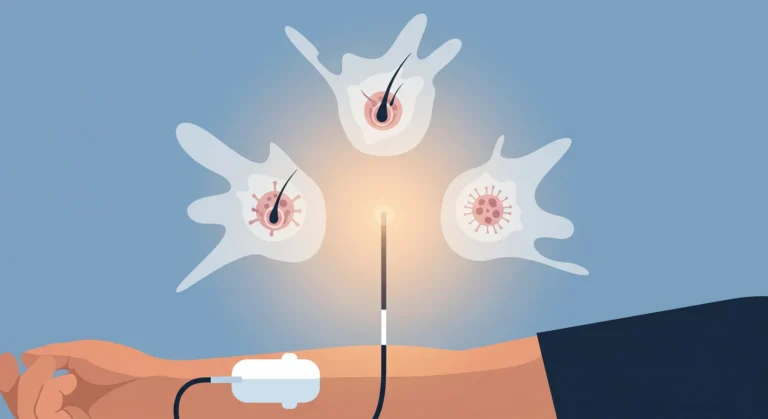
Immunotherapy cancer treatment is a broad category of treatments that harness your own immune system to find and destroy cancer cells. Rather than attacking tumours directly with toxic chemicals, as chemotherapy does, immunotherapy works by boosting, guiding, or removing the brakes from your body’s natural defences. It has reshaped oncology over the past decade, and if you’ve just heard the word for the first time in a clinic or on a scan report, this guide will walk you through exactly what it means.
If you’re still getting comfortable with oncology vocabulary, pronouncing carcinoma and other cancer terms is a good place to start before diving deeper.
What Is Immunotherapy Cancer Treatment?
Immunotherapy is not a single drug or procedure. It’s a family of approaches, checkpoint inhibitors, engineered cell therapies, vaccines, and cytokine treatments, all united by the same idea: use the immune system as the weapon.
How the immune system normally fights cancer
Your immune system constantly patrols the body. Specialised white blood cells called T-cells can recognise abnormal proteins on the surface of cancer cells and kill them before a tumour takes hold. In many cases, this works silently and you never know it happened.
Why cancer sometimes escapes immune detection
Cancer cells are clever. They mutate quickly, and some develop ways to disguise themselves or actively switch off T-cells before they can attack. One key mechanism is the immune checkpoint, a molecular “off switch” that the immune system normally uses to prevent it from attacking healthy tissue. Cancer cells can hijack these checkpoints to protect themselves. Understanding how they do that is central to understanding modern immunotherapy.
Immune Checkpoint Inhibitors: Releasing the Brakes
Checkpoint inhibitor drugs are currently the most widely used form of immunotherapy in oncology. They work by blocking the signals cancer cells use to shut down T-cells.
What is an immune checkpoint?
An immune checkpoint is a protein interaction that acts as a natural brake on the immune system. The body needs these brakes, without them, immune cells would attack healthy tissue. Two of the most studied checkpoints are:
- PD-1 / PD-L1, PD-1 is a receptor on T-cells. When a cancer cell displays PD-L1 on its surface, it binds to PD-1 and essentially tells the T-cell to stand down.
- CTLA-4, Another receptor on T-cells that, when activated, dampens the immune response early in its cycle.
How checkpoint inhibitor drugs work
Checkpoint inhibitor drugs are antibodies that block these interactions. A PD-1 inhibitor, for example, binds to the PD-1 receptor and physically prevents cancer cells from using PD-L1 to switch the T-cell off. The T-cell stays active, and attacks the tumour.
PD-1 inhibitors like pembrolizumab and nivolumab, and CTLA-4 inhibitors like ipilimumab, have become standard of care in advanced melanoma and non-small-cell lung cancer, cancer types where overall survival was historically measured in months before these drugs arrived.
The checkpoint inhibitor approach doesn’t target a specific tumour site. It targets a biological mechanism, which is why the same class of drugs can be useful across many cancer types.
CAR-T Cell Therapy: Reengineering Your Own Immune Cells
CAR-T cell therapy takes immunotherapy a step further. Instead of just unblocking T-cells, it rebuilds them from scratch to be better cancer hunters.
Here’s how the process works, step by step:
- Collection, Doctors draw blood from the patient and filter out T-cells using a process called leukapheresis.
- Engineering, In a specialist laboratory, the T-cells are genetically modified. A new receptor, the Chimeric Antigen Receptor (CAR), is inserted into each cell. This receptor is designed to recognise a specific protein on the patient’s cancer cells.
- Expansion, The modified cells are multiplied into millions of copies over several weeks.
- Reinfusion, The engineered army of CAR-T cells is infused back into the patient, where they seek out and destroy cancer cells carrying the target protein.
CAR-T has shown durable remissions in patients with certain relapsed or refractory B-cell lymphomas and acute lymphoblastic leukemia, diseases where chemotherapy had already stopped working, making it one of the most significant shifts in blood cancer care in recent decades. As of 2026, it remains most established in blood cancers rather than solid tumours, though research into solid tumour applications is active.
Other Types of Immunotherapy
Checkpoint inhibitors and CAR-T are the most prominent approaches, but they’re not the only ones.
Cancer vaccines
Unlike preventive vaccines (which protect against viruses that cause cancer, like HPV), therapeutic cancer vaccines are designed to treat existing disease. They train the immune system to recognise and attack specific proteins found on a patient’s tumour. Several are in active clinical development.
Cytokines and immune system boosters
Cytokines are proteins the body naturally uses to regulate immune responses. Synthetic versions, including interleukins like IL-2 and interferons, can be administered to amplify immune activity against cancer. These therapies are older than checkpoint inhibitors and carry significant side effects at high doses, so their use is now more targeted and often combined with other treatments.
Immunotherapy Side Effects: What Patients Should Know
Because immunotherapy activates the immune system broadly, it can sometimes cause it to attack healthy tissue. These are called immune-related adverse events (irAEs), and oncologists often describe them as “the immune system doing its job too well.”
Common irAEs with checkpoint inhibitor treatment include:
- Skin rash or itching, among the most frequent, and usually manageable
- Colitis, inflammation of the large intestine, causing diarrhea
- Thyroid disruption, the thyroid gland can become overactive or underactive
- Pneumonitis, inflammation in the lungs, which requires prompt attention
Immunotherapy side effects are different in character from chemotherapy side effects. Chemotherapy causes nausea, hair loss, and suppressed immunity because it attacks fast-dividing cells throughout the body. Immunotherapy side effects tend to be inflammation-based, because they stem from an overactivated immune response rather than toxic cell damage.
Medical teams monitor patients on immunotherapy closely, with regular blood tests and imaging. Most irAEs are manageable with corticosteroids and, in some cases, by pausing or stopping the immunotherapy.
Immunotherapy vs Chemotherapy: Key Differences
These two treatment categories work through completely different mechanisms, and neither is universally better, the right choice depends on cancer type, stage, and the patient’s individual biology.
| Immunotherapy | Chemotherapy | |
|---|---|---|
| Mechanism | Activates or guides the immune system | Directly kills fast-dividing cells |
| Side effects | Inflammation-based (irAEs) | Nausea, hair loss, bone marrow suppression |
| Who responds | Often depends on biomarkers | Broader applicability across tumour types |
| Duration of response | Can produce long-lasting remissions | Tumours can develop resistance more quickly |
Immunotherapy vs chemotherapy is not an either/or decision. Many treatment plans combine both, or use immunotherapy after chemotherapy has stopped working. How cancer staging works influences which approach, or combination, is most appropriate at each point in a patient’s care.
Which Cancer Types Can Immunotherapy Treat?
Immunotherapy now has established roles across a growing list of cancer types. These include:
- Melanoma, one of the earliest and most dramatic success stories
- Non-small-cell lung cancer, checkpoint inhibitors are now first-line in many patients
- Bladder cancer, PD-L1 inhibitors are used in advanced disease
- Kidney cancer, combination immunotherapy has become standard in metastatic disease
- Head and neck cancers, checkpoint inhibitors are approved for recurrent or metastatic disease
- Certain lymphomas, both checkpoint inhibitors and CAR-T are used
- Colorectal cancer with specific genetic features, a landmark case below explains why
Whether a patient qualifies for immunotherapy depends heavily on biomarker testing. In 2017, the FDA approved pembrolizumab for any solid tumour with high microsatellite instability (MSI-H), regardless of where in the body the cancer started. It was the first time a cancer drug was approved based on a biomarker rather than a tumour’s location, and it changed how oncologists think about treatment eligibility.
Biomarker testing, including PD-L1 expression levels and mismatch repair (MMR) status, is now routinely ordered before starting immunotherapy, because patients whose tumours score high on these markers tend to respond significantly better than those who don’t. These results typically appear in your pathology report. Learning how to read your pathology report can help you understand exactly what your results mean and what questions to ask your care team.
If you encountered any terms in this guide that felt unfamiliar, the Cancer Terminology glossary is a free, plain-language reference built for exactly this purpose, so you always have somewhere to turn when your care team uses a word you don’t recognise. Explore related entries whenever a new term comes up; the more clearly you understand the language of your treatment, the more confidently you can take part in decisions about your care.