Cancer Therapy: Types, Goals, and Treatment Plans
A cancer diagnosis brings an immediate flood of new words, and few feel more urgent than the question of treatment. Cancer therapy is the broad term for any medical intervention designed to stop, slow, or eliminate cancer cells in the body. It is not a single drug or a single procedure. It is a category that covers surgery, radiation, medicines, immune system training, and more, each chosen to match the specific cancer a person is facing. Understanding what therapy does, and why, is one of the most powerful things you can bring into that first oncology appointment.
At Cancer Terminology, we hear from patients who say understanding what their therapy does, in plain language, is what helped them feel ready to walk into their first treatment session. That shift from confusion to confidence is exactly what this guide is built for.
What Is Cancer Therapy?
Cancer therapy is any treatment applied with the goal of eliminating, controlling, or managing cancer cells. The overall aim depends on the situation: for some patients the goal is cure; for others it is controlling growth for as long as possible; for others it is keeping symptoms manageable and quality of life high. All of these are legitimate, meaningful goals.
How Therapy Differs From a Cure
“Cure” means cancer is gone and will not return. Therapy is the process used to get there, or to manage the disease when a complete cure is not yet achievable. Successful therapy can result in what remission means, a period when cancer is undetectable or no longer growing, without guaranteeing the cancer will never return. That distinction matters. It shapes realistic expectations and helps patients talk honestly with their care team about goals.
Why the Right Therapy Depends on the Cancer Type
No single therapy works for every cancer. A leukemia (cancer of the blood) responds to very different treatments than a solid tumor in the colon or lung. Cancers differ at a cellular level: how fast they grow, which proteins they produce, whether they carry specific gene mutations, and how they interact with the immune system all influence which treatments are effective. Matching therapy to cancer type is not guesswork. It is precision medicine built on a growing body of research.
The Main Types of Cancer Therapy
Modern oncology offers several well-established treatment modalities. Most patients will encounter at least two of them during their care.
Surgery, Radiation, and Chemotherapy
Surgery removes a tumor or the tissue surrounding it. It works best for solid tumors that are localized, meaning they have not spread widely. Surgery is often the first step, especially when a tumor is accessible and has defined borders.
Radiation therapy uses high-energy beams, most commonly X-rays, to damage the DNA inside cancer cells and prevent them from dividing. It can be delivered externally (a machine aims beams at the body) or internally via radioactive material placed near a tumor (brachytherapy). Radiation is precise, but it does affect surrounding healthy tissue, which is why managing radiation therapy side effects is an active part of care.
Chemotherapy uses drugs that circulate through the bloodstream and kill rapidly dividing cells. Because cancer cells divide faster than most healthy cells, they are particularly vulnerable. Chemotherapy also affects fast-dividing healthy cells, in the gut lining, hair follicles, and bone marrow, which explains many of its side effects.
Targeted Therapy, Immunotherapy, and Hormone Therapy
Targeted therapy attacks specific molecules, proteins or gene mutations, that cancer cells rely on to grow. Because it is aimed at a precise biological target, it typically causes fewer off-target side effects than traditional chemotherapy. It requires that the patient’s tumor actually carry the target in question, which is why biomarker testing matters so much before choosing this approach.
Immunotherapy trains or amplifies the body’s own immune system to recognize and attack cancer cells. A class of drugs called checkpoint inhibitors, which remove the “brakes” that cancer uses to hide from immune cells, has transformed outcomes for several cancer types, particularly melanoma and non-small-cell lung cancer, where five-year survival rates have improved meaningfully over the past decade as checkpoint inhibitors became standard of care.
Hormone therapy is used for cancers fueled by hormones, most commonly breast cancer and prostate cancer. It works by either lowering the body’s hormone levels or blocking the receptors cancer cells use to receive hormonal signals.
How Treatment Plans Are Built
Oncologists do not pick a therapy at random. They build a treatment plan from a structured body of information gathered in the weeks after diagnosis.
The first step is staging, assessing how far the cancer has spread. Understanding how cancer staging works is central to understanding treatment logic: a stage I tumor confined to one location may call for surgery alone, while a stage IV cancer that has reached distant organs typically requires systemic therapy that travels through the bloodstream.
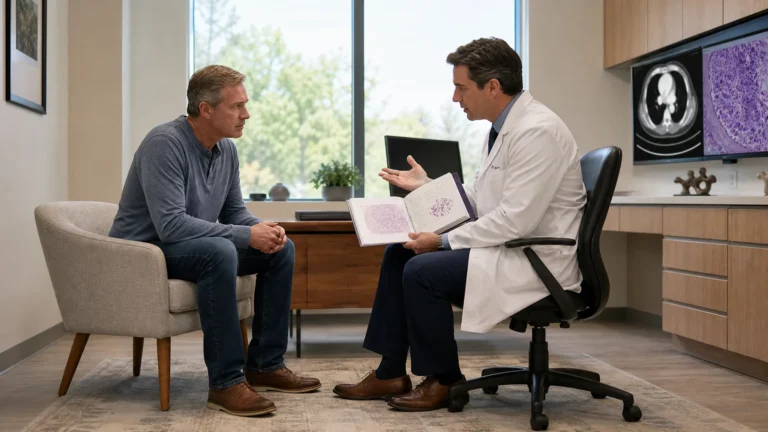
Alongside staging, oncologists order pathology and biomarker tests. Pathology examines tumor tissue under a microscope to confirm cancer type and grade. Biomarker testing, including genetic profiling, looks for specific mutations or protein markers that predict which therapies will work. For hereditary cancers, genetic testing and inherited cancer risk can also reveal whether family members face elevated risk. Staging and biomarker testing are not bureaucratic steps. They are the foundation on which the entire treatment plan is built, and patients who understand their stage are better equipped to participate in shared decision-making.
Combining Therapies: Multimodal Approaches
Many patients receive more than one type of cancer therapy, either simultaneously or in sequence. This is called a multimodal approach. A common example in breast cancer care is chemotherapy before surgery, called neoadjuvant chemotherapy, which shrinks the tumor before removal, making surgery more effective and reducing recurrence risk afterward. Surgery may then be followed by radiation and possibly hormone therapy.
Treatment given after surgery to eliminate remaining cancer cells is called adjuvant therapy. Adjuvant chemotherapy explained covers this approach in detail, it is one of the most common ways oncologists use sequential therapy to lower the chance of cancer returning.
Side Effects and What to Expect During Cancer Therapy
Side effects are real, and it helps to know what to expect rather than be caught off guard. The most common ones across therapy types are fatigue, nausea and vomiting, hair loss (particularly with chemotherapy), and a weakened immune system that raises infection risk.
Radiation therapy tends to produce localized effects, skin irritation, fatigue, or discomfort in the area being treated. Immunotherapy can occasionally trigger the immune system to attack healthy tissue, causing inflammation in joints, the gut, or other organs. Targeted therapies generally have a narrower side-effect profile, though they still cause issues like skin rashes or blood pressure changes in some patients.
The important message is this: many side effects are manageable. Supportive care, anti-nausea medications, growth factors to support white blood cell counts, dietary guidance, and mental health support, has improved enormously. Your care team wants to hear about what you are experiencing. An open conversation makes it possible to adjust doses, add supportive treatments, or change the approach before side effects become serious.
Emerging and Investigational Cancer Therapies in 2026
The field of cancer therapy is moving faster than at any previous point. Several directions stand out right now.
CAR-T cell therapy takes a patient’s own T-cells (an immune cell), engineers them in a lab to recognize specific cancer proteins, and infuses them back into the body as a living treatment. Originally approved for certain blood cancers like diffuse large B-cell lymphoma, CAR-T is now being studied extensively in solid tumors, one of the most closely watched frontiers in cancer therapy heading into 2027.
Cancer vaccines are moving from experimental to clinical reality. Therapeutic vaccines, designed not to prevent cancer but to help the immune system attack existing tumors, are showing meaningful results in early trials for melanoma and other cancers, sometimes in combination with checkpoint inhibitors.
Precision oncology is also expanding. As sequencing technology becomes faster and more affordable, more patients can have their tumor’s full genetic profile mapped, allowing oncologists to match treatments to molecular fingerprints rather than just tissue of origin.
If you are curious about investigational options, clinical trials are a legitimate and sometimes advantageous path. Understanding how cancer clinical trials work can help you have a more confident conversation with your doctor about whether one might be right for your situation.
Navigating Cancer Therapy: Questions to Ask Your Care Team
Knowledge is a form of advocacy. Walking into an appointment with clear questions helps you participate in your own care, not just receive it. Here are practical questions worth bringing:
- What is the goal of this therapy, cure, control, or symptom management?
- Why is this therapy recommended for my specific cancer type and stage?
- What biomarker or genetic tests informed this plan, and what did they show?
- Will I receive one therapy or a combination? In what order?
- What side effects should I expect, and what support is available to manage them?
- How will we know if the therapy is working? What scans or tests will track progress?
- Are there clinical trials I would be eligible for?
- What happens if this therapy stops working? What are the next options?
There are no wrong questions. Oncologists and nurses want you to understand the plan, it makes you a better-informed partner in your own treatment.
If you encountered a term in this article that you want to understand more deeply, the Cancer Terminology glossary is built exactly for that moment. Every therapy-related word, from “adjuvant” to “checkpoint inhibitor” to “neoadjuvant”, has its own plain-language entry, written to turn unfamiliar jargon into something you can actually use. Explore it at any point in your cancer journey; understanding the language of your care is never a small thing.