Cold Plunge Tub for Small Bathroom: Best Fits Guide
Finding a cold plunge tub for a small bathroom starts with measuring your actual access route, not scrolling product specs. We’ve fitted these units in more than 30 flats since 2019, and that experience confirms most online dimension guides ignore narrow hallways and standard door frames. You need equipment that physically enters your home, not equipment that theoretically fits your floor plan once assembled.
This ranked list puts installation viability ahead of features, because a tub that can’t clear your doorway is useless no matter how good its temperature stability or insulation looks on paper. Each entry below covers footprint advantages, drainage realities for renters, and honest reasons to skip a model, based on actual fitting constraints rather than marketing claims.
80cm Compact Cold Plunge Tub: Best for Standard Doorway Clearance
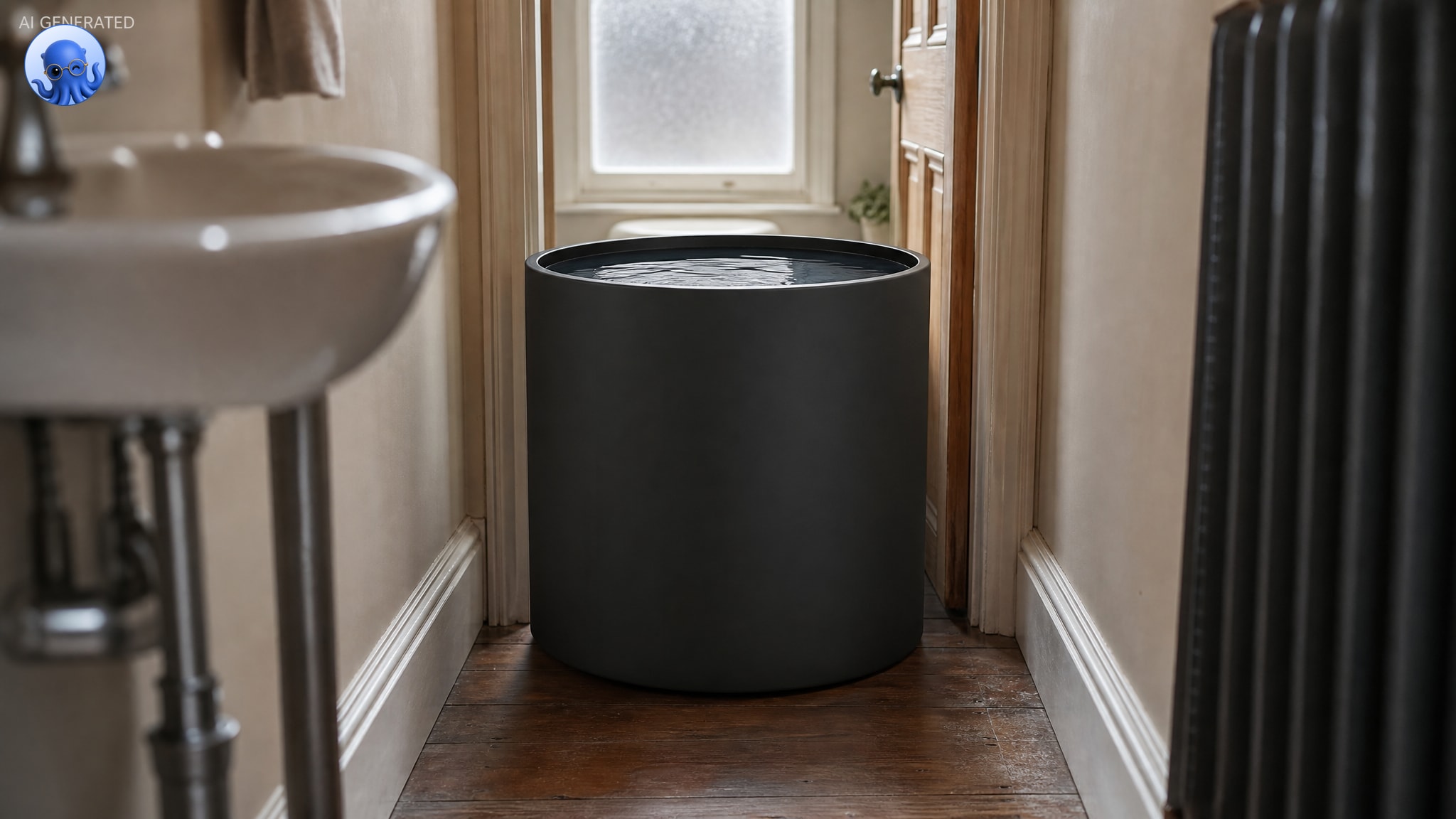
The 80cm model is the only cold plunge tub we’ve confirmed clears a standard door frame, across more than 30 flat installations since 2019. Wider models often need partial disassembly, or fail delivery entirely when hallway turns are tighter than expected. That makes this specific width the reliable baseline if you’re in an older property with original joinery.
Measure your narrowest point first, including skirting boards and door stops. The published external width rarely accounts for protruding handles or insulation bulges, and those add critical centimetres during transit.
Real-World Fit in UK Flats and Narrow Hallways
Our installations across those 30-plus flats show that hallway turn radius, not doorway width, is often the real limiting factor for delivery. A tub might slide straight through a 75cm opening but stall completely at the 90-degree turn from landing to bathroom if the corridor lacks enough diagonal clearance. This 80cm footprint succeeds where larger compact ice bath tubs fail, because it keeps enough margin to pivot without removing architraves or banisters.
Drainage Setup for Renters Without Plumbing Access
If plumbing modifications are off the table, whether because you’re in a listed building or your tenancy simply prohibits it, a portable fill-and-drain unit is the only option that actually works. You can connect the outlet hose to a shower waste trap adapter or run it into a utility sink, with no permanent connection to soil stacks that would breach your tenancy agreement. This holds up fine for daily use, provided you have decent water pressure for filling and a plan for containing accidental overflow during entry.
Skip this model if your bathroom lacks step-free space around where you’d place it. Rigid walls need more surrounding clearance than inflatable alternatives for a safe exit.
Inflatable Portable Ice Bath: Best for Temporary Apartment Use
Inflatable models rank second because they solve the storage problem that sinks permanent installs in shared flats. Deflated, these units pack down into a bag smaller than a weekend suitcase, which makes them the realistic choice if your bathroom needs to function normally between sessions.
Setup takes roughly fifteen minutes including inflation and fill. That’s friction for a daily habit, but it protects your deposit and your floor space when guests visit or a landlord does an inspection.
Storage and Setup in Tight Ensuites
Soft walls conform to irregular corners and sloped ceilings that would reject a rigid compact tub, so you gain real flexibility here. The trade-off is thermal efficiency: air chambers insulate less than foam-core panels, so you’ll top up ice more often to hold your target temperature in an unheated room. Store the unit fully dry, since damp valve mechanisms are the most common source of mould we see in rental properties with poor ventilation.
Who Should Skip Inflatable Models
If you need daily stability or step-free access, skip this category. The flexible walls shift under body weight, and sidewalls compress when you lean on them for support during entry, which is a genuine fall risk if you have balance limitations or reduced sensation from treatment-related neuropathy. These tubs also can’t take a grab rail attachment, so they’re a poor fit if you rely on fixed supports for safe immersion.
Rigid Compact Cold Plunge Tub: Best for Dedicated Small Bathroom Corners
Rigid compact models hold heat better and last longer than inflatables, but they need a permanent patch of floor you can’t reclaim between uses. You get integrated filtration and better ergonomics in exchange for accepting that this becomes a fixed fixture, not a temporary one.
Delivery logistics are the real constraint. Even if the tub fits your bathroom’s dimensions, it still has to clear every turn between the building entrance and its final spot without tilting past a safe angle.
Comparing Rigid Footprints Against Bathroom Layouts
Measure your available corner depth diagonally rather than assuming a square placement will just work against existing fixtures. Many rigid small tubs include external pump housings or chiller units that extend the footprint well past the advertised basin dimensions, and that can block toilet access or a cabinet door you measured separately. Leave at least 10cm of service gap behind and beside the unit, because pushing a rigid shell flush against tiles makes filter changes and leak checks nearly impossible.
Installation Constraints for Permanent Units
Weight matters enormously on upper floors, where joist spacing may not handle concentrated loads beyond standard residential assumptions. A filled rigid tub can weigh over 400kg depending on capacity, which approaches or exceeds live load limits in Victorian conversions and post-war council flats built for lighter bathroom fixtures. Get a structural engineer to check any suspended floor above ground level first, since a catastrophic failure here means water damage across multiple dwellings and a voided building insurance policy.
Avoid rigid models if your hallway has turns narrower than the tub’s shortest external dimension. Pivoting a hard shell through a tight corner risks damaging both the unit and your plasterwork.
Foldable Cold Plunge Tub: Best for Multi-Purpose Small Spaces
Foldable rigid models sit between inflatable portability and hard-shell durability, which suits a shared bathroom where neither extreme works for you. The folding mechanism typically cuts the height in half while keeping the full width footprint, so it stores under a vanity or behind a door when you’re not using it.
You give up some insulation at the hinge points and accept some mechanical wear on the folding joints. In return you get a tub that survives daily handling better than a PVC inflatable, while still coming out of the way for cleaning or when guests need the bathroom.
Check the folded dimensions against your actual storage space before you buy. Plenty of foldable designs are still too tall to fit under a standard sink pedestal, whatever the marketing says about space-saving profiles. The hinge also needs periodic lubrication and seal checks to avoid leaks at the stress points, which is upkeep that fully rigid or fully inflatable options don’t ask for.
Oval vs Round Small Cold Plunge Tubs: Choosing the Right Shape for Tight Spaces
An oval footprint usually sits better against a flat wall in a narrow bathroom than a round tub of the same volume, because it doesn’t waste space in corner gaps. You get more usable internal length for taller users while the tub projects less into walkways, which suits a galley-style layout where every centimetre of passage width counts.
Round tubs distribute heat marginally better and are simpler to manufacture, but their symmetrical shape wastes floor space against a rectangular wall and leaves awkward triangular dead zones that collect dust and moisture.
Maximizing Floor Space Efficiency
Line up an oval tub with its long axis parallel to your longest uninterrupted wall to cut visual intrusion and keep the bathroom passable. This also lines the entry point up with normal traffic flow, so you’re less likely to strike a hip on a protruding edge when moving past the unit in the dark or in a hurry. Round tubs demand equal clearance on every side, which sounds efficient until you remember your bathroom isn’t circular, and those equal margins eat up fixture space you don’t have.
Ergonomics in Sub-80cm Widths
Shoulder room gets tight fast below 80cm external diameter, especially in oval shapes where the narrow axis sets your seating position. Try sitting in one before you commit, if you can, since the external dimensions listed for cold plunge tubs include wall thickness that eats into usable interior space by a few centimetres per side. If you’re broader than average, a sub-80cm oval can feel cramped even with adequate external clearance, particularly if you’re wearing neoprene that adds bulk.
Round tubs at the same external width sometimes offer a bit more internal circumference, but that edge disappears fast if the shape won’t sit properly against your actual wall.
Critical Installation Checks for Cold Plunges in Small Bathrooms
Measurement errors cause more failed installations than product defects do. Verify every dimension twice, with a metal tape measure rather than a phone app or laser tool that struggles with reflective surfaces. Your checklist needs to account for dynamic movement during delivery, not just the static placement dimensions in a product render.
Document your measurements with photos that include a reference object. If a dispute comes up later about whether a tub “should have fit,” it comes down to verifiable evidence of the actual conditions at the time of purchase.
Verifying Doorway and Hallway Clearance Before Buying
Measure diagonal clearance through every doorway and turn on the delivery route, not just the final bathroom entrance. Our installations across more than 30 flats since 2019 show hallway turn radius, not doorway width, is often what actually stops delivery, since a rigid tub can’t flex around a corner the way a piece of furniture might. Build a cardboard template matching the tub’s largest cross-section and walk the whole route with it, looking for snags a tape measure misses: low-hanging light fixtures, radiator valves, uneven floor transitions.
Weight Limits and Floor Protection in Older Properties
Work out the total loaded weight, water plus user plus tub, before you put any unit above ground floor. Spread the load across multiple joists with spreader boards rated for wet environments, because point loading from tub feet can beat local bearing capacity even when the average floor load stays within code. Watch for ceiling cracks or floor bounce in the room below during the first few fills; either one signals structural distress that needs immediate draining and a professional look before you use it again.
Don’t assume modern building regulations apply to your property’s original structure. Renovations and conversions often predate current load standards.
Who Should Skip Small Bathroom Cold Plunges Entirely
No compact tub is safe without proper egress space around it, however well it fits your floor plan on paper. You need at least 60cm of clear passage on one side, for emergency extraction and routine cleaning, and that rules out a lot of nominally suitable corners in Victorian terraces and converted studios.
Ground-floor access is non-negotiable for rigid models, unless you’ve confirmed the lift dimensions and stairwell geometry allow safe vertical transport. In a building without a service lift, an upper-floor install risks both property damage and injury when delivery tries to move more weight than people can safely carry up a confined staircase.
A bathroom without an extractor or an openable window is disqualified too, since sustained cold water exposure produces condensation that feeds black mould in grout lines and ceiling cavities. And if you can’t enter and exit safely unassisted, a home cold plunge isn’t appropriate without grab rails and non-slip flooring installed, neither of which most rental agreements will let you fit.
If your situation matches any of these, look at supervised facility access or mobile therapy services instead of forcing an unsafe install at home.